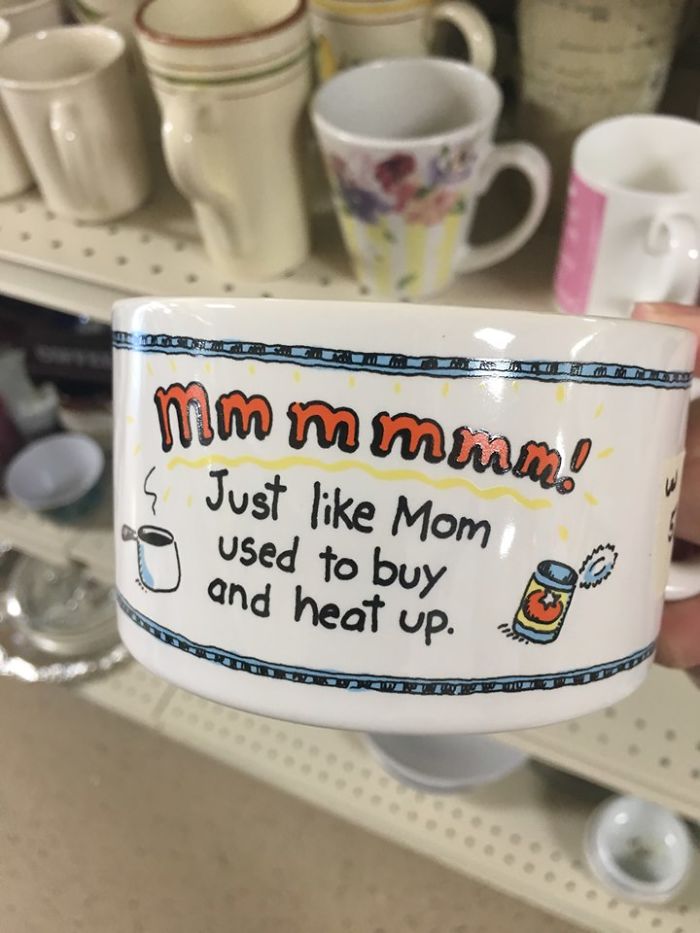
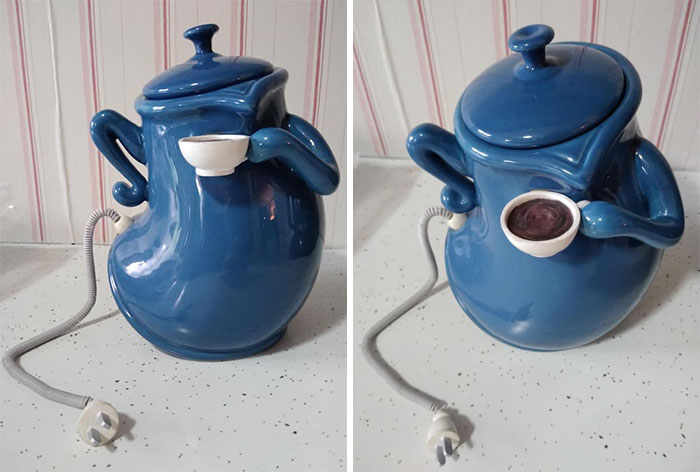
The best part about shopping at thrift stores is that you never know what you are going to find. Most stores these days have a generic theme – you have a basic expectation of what they sell. But thrift stores offer objects from all walks of life. You could find things that have been stashed in someone’s attic for 50 years; old books, LPs, trophies, clothes, electronics… All have belonged to others and have their own unique story to tell. Exciting, isn’t it?
Sure, 95% of it is junk. But, as they say, one man’s trash is another man’s treasure, so there is always some value there if you look hard enough! This list finds value mainly in the weird and wonderful; there are some truly bizarre objects here. The Facebook group ‘Weird Secondhand Finds That Just Need To Be Shared’ is a goldmine of oddities and curios, and as a follow on to previous posts herehere and here, we just had to share the latest finds.
Visit Bored Panda to check out the best of them for yourself, and head down to your local thrift store this weekend!
Social impact: Thrift stores make it easier to know where your money is going. To track the money you handed over for that brand-new Old Navy polo, you would need to trace the brand back to the corporation behind it, the assembly factories used by the corporation, their textile providers, and those textile providers’ raw materials suppliers—at a bare minimum.
In evaluating all these steps (and the many others involved in the production chain), there are numerous considerations to keep in mind: Was your farmer using environmentally responsible methods? Was your seamstress of legal working age, paid a fair wage to work in a safe factory? Is the corporation behind it the kind you want to support, or one whose views you wouldn’t like to see perpetuated?
In short, it can be a bit of a nightmare to track the impact of your seemingly trivial purchase. However, with most thrift stores, this burden is greatly reduced. For better or worse, the original purchaser’s money has already supported the whole chain of production that led to your second-hand Old Navy polo. Since most thrift stores in Europe, North America, and Australia rely heavily (if not exclusively) on donated clothing, this means you only have to question one link in the whole chain—the store right in front of you.
Many thrift stores also directly support charity. It’s no coincidence that in the UK and Ireland, the term “thrift store” doesn’t even exist—they call them “charity shops” instead. In America, the best-known thrift stores are Goodwill and The Salvation Army, organizations which provide services to the unemployed, homeless, and disabled. In Europe, NGOs like Oxfam commonly use thrift stores to raise funds for humanitarian aid. By shopping at these kinds of establishments, your clothing purchase can go from supporting Third World child labor to supporting Third World children’s’ education.
Much more at https://www.boredpanda.com/second-hand-thrift-store-finds/


 Cuppa Daisies